
Voice Microservices Release Notes
Contents
- 1 Voice SIP Cluster Service: January 12, 2024
- 2 Voice Voicemail Service: December 20, 2023
- 3 Voice Orchestration Service: December 18, 2023
- 4 Voice Registrar Service: October 06, 2023
- 5 Voice Orchestration Service: October 06, 2023
- 6 Voice SIP Cluster Service: October 06, 2023
- 7 Voice Registrar Service: July 31, 2023
- 8 Voice Orchestration Service: July 31, 2023
- 9 Voice SIP Cluster Service: July 31, 2023
- 10 Voice RQ Service: May 02, 2023
- 11 Voice Agent State Service: May 02, 2023
- 12 Voice Orchestration Service: May 02, 2023
- 13 Voice Orchestration Service: January 30, 2023
- 14 Voice Call State Service: September 20, 2022
- 15 Voice Voicemail Service: September 20, 2022
- 16 Voice Orchestration Service: September 20, 2022
- 17 Voice Config Service: September 20, 2022
- 18 Voice Agent State Service: September 20, 2022
- 19 Voice Dial Plan Service: September 20, 2022
- 20 Voice Tenant Service: September 12, 2022
- 21 Voice Registrar Service: August 25, 2022
- 22 Voice Call State Service: August 25, 2022
- 23 Voice Front End Service: August 25, 2022
- 24 Voice RQ Service: August 25, 2022
- 25 Voice SIP Proxy Service: August 25, 2022
- 26 Voice Agent State Service: August 25, 2022
- 27 Voice Dial Plan Service: August 25, 2022
- 28 Voice Orchestration Service: August 25, 2022
- 29 Voice Voicemail Service: August 25, 2022
- 30 Voice Config Service: August 25, 2022
- 31 Voice Orchestration Service: August 17, 2022
- 32 Voice SIP Cluster Service: August 02, 2022
- 33 Voice Call State Service: July 25, 2022
- 34 Voice Front End Service: July 25, 2022
- 35 Voice Config Service: July 25, 2022
- 36 Voice Agent State Service: July 25, 2022
- 37 Voice Registrar Service: July 25, 2022
- 38 Voice SIP Cluster Service: July 25, 2022
- 39 Voice RQ Service: July 25, 2022
- 40 Voice Dial Plan Service: July 25, 2022
- 41 Voice SIP Proxy Service: July 25, 2022
- 42 Voice Tenant Service: July 08, 2022
- 43 Voice Orchestration Service: June 29, 2022
- 44 Voice Orchestration Service: May 24, 2022
- 45 Voice Tenant Service: May 20, 2022
- 46 Voice SIP Cluster Service: April 04, 2022
- 47 Voice Orchestration Service: April 01, 2022
- 48 Voice Dial Plan Service: March 28, 2022
- 49 Voice SIP Cluster Service: March 28, 2022
- 50 Voice Config Service: March 28, 2022
- 51 Voice Agent State Service: March 28, 2022
- 52 Voice Call State Service: March 28, 2022
- 53 Voice RQ Service: March 28, 2022
- 54 Voice Registrar Service: March 28, 2022
- 55 Voice Front End Service: March 28, 2022
- 56 Voice SIP Proxy Service: March 08, 2022
- 57 Voice SIP Cluster Service: March 07, 2022
- 58 Voice Orchestration Service: February 22, 2022
- 59 Voice SIP Cluster Service: February 16, 2022
- 60 Voice Orchestration Service: February 16, 2022
- 61 Voice Tenant Service: February 07, 2022
- 62 Voice Voicemail Service: February 01, 2022
- 63 Voice Orchestration Service: January 19, 2022
- 64 Voice Voicemail Service: December 10, 2021
- 65 Voice SIP Cluster Service: November 19, 2021
- 66 Voice SIP Proxy Service: November 12, 2021
- 67 Voice Orchestration Service: November 12, 2021
- 68 Voice Orchestration Service: October 28, 2021
- 69 Voice Tenant Service: October 21, 2021
- 70 Voice Orchestration Service: October 11, 2021
- 71 Voice SIP Cluster Service: September 27, 2021
- 72 Voice Agent State Service: September 22, 2021
- 73 Voice SIP Cluster Service: September 22, 2021
- 74 Voice Tenant Service: September 16, 2021
- 75 Voice Orchestration Service: September 15, 2021
- 76 Voice Registrar Service: September 15, 2021
- 77 Voice Config Service: September 15, 2021
- 78 Voice Call State Service: September 15, 2021
- 79 Voice SIP Cluster Service: September 15, 2021
- 80 Voice SIP Proxy Service: September 15, 2021
- 81 Voice Front End Service: September 15, 2021
- 82 Voice Agent State Service: September 15, 2021
- 83 Voice Dial Plan Service: September 15, 2021
- 84 Voice RQ Service: September 15, 2021
- 85 Voice Orchestration Service: August 19, 2021
- 86 Voice Tenant Service: August 05, 2021
- 87 Voice Agent State Service: June 30, 2021
- 88 Voice Dial Plan Service: June 30, 2021
- 89 Voice Call State Service: June 30, 2021
- 90 Voice RQ Service: June 30, 2021
- 91 Voice Front End Service: June 30, 2021
- 92 Voice Registrar Service: June 30, 2021
- 93 Voice SIP Cluster Service: June 30, 2021
- 94 Voice SIP Proxy Service: June 30, 2021
- 95 Voice Config Service: June 30, 2021
- 96 Voice Tenant Service: June 30, 2021
- 97 Voice Orchestration Service: June 30, 2021
Not all releases or changes listed below may pertain to your deployment. Check the table below to see which releases apply to you.
| Service | Available | Genesys CX on | Private edition | Highlights | Release | |
|---|---|---|---|---|---|---|
| AWS | Azure | |||||
| Voice SIP Cluster Service | January 12, 2024 |
|
Resolved issue. | 100.0.100.0052 | ||
| Voice Voicemail Service | December 20, 2023 |
|
Resolved issue. | 100.0.100.0030 | ||
| Voice Orchestration Service | December 18, 2023 |
|
Resolved issue. | 100.0.100.0081 | ||
| Voice Registrar Service | October 6, 2023 |
|
Resolved issue. | 100.0.100.0031 | ||
| Voice SIP Cluster Service | October 6, 2023 |
|
Resolved issue. | 100.0.100.0051 | ||
| Voice Orchestration Service | October 6, 2023 |
|
Resolved issues. | 100.0.100.0079 | ||
| Voice Registrar Service | July 31, 2023 |
|
Resolved issue. | 100.0.100.0029 | ||
| Voice SIP Cluster Service | July 31, 2023 |
|
Resolved issue. | 100.0.100.0050 | ||
| Voice Orchestration Service | July 31, 2023 |
|
Resolved issues. | 100.0.100.0077 | ||
| Voice Agent State Service | May 2, 2023 |
|
| 100.0.100.0027 | ||
| Voice Orchestration Service | May 2, 2023 |
|
Resolved issue. | 100.0.100.0075 | ||
| Voice RQ Service | May 2, 2023 |
|
Resolved issue. | 100.0.100.0018 | ||
| Voice Orchestration Service | January 30, 2023 |
|
Resolved issues. | 100.0.100.0072 | ||
| Voice Agent State Service | September 20, 2022 |
|
 |
Support for Genesys Multicloud CX private edition deployments on Azure Kubernetes Service (AKS).
| 100.0.100.0017 | |
| Voice Voicemail Service | September 20, 2022 |
|
|
Support for Genesys Multicloud CX private edition deployments on Azure Kubernetes Service (AKS).
| 100.0.100.0016 | |
| Voice Orchestration Service | September 20, 2022 |
|
|
Support for Genesys Multicloud CX private edition deployments on Azure Kubernetes Service (AKS).
| 100.0.100.0063 | |
| Voice Call State Service | September 20, 2022 |
|
|
Support for Genesys Multicloud CX private edition deployments on Azure Kubernetes Service (AKS).
| 100.0.100.0016 | |
| Voice Dial Plan Service | September 20, 2022 |
|
|
Support for Genesys Multicloud CX private edition deployments on Azure Kubernetes Service (AKS).
| 100.0.100.0018 | |
| Voice Config Service | September 20, 2022 |
|
|
Support for Genesys Multicloud CX private edition deployments on Azure Kubernetes Service (AKS).
| 100.0.100.0014 | |
| Voice Tenant Service | September 12, 2022 |
|
|
Important information about upgrading Tenant Service. | 100.0.100.0076 | |
| Voice SIP Proxy Service | August 25, 2022 |
|
|
Third-party dependency updates. | 100.0.100.0020 | |
| Voice Agent State Service | August 25, 2022 |
|
|
Third-party dependency updates. | 100.0.100.0015 | |
| Voice Dial Plan Service | August 25, 2022 |
|
|
Third-party dependency updates. | 100.0.100.0016 | |
| Voice Config Service | August 25, 2022 |
|
|
Third-party dependency updates. | 100.0.100.0011 | |
| Voice Front End Service | August 25, 2022 |
|
|
Third-party dependency updates. | 100.0.100.0010 | |
| Voice Orchestration Service | August 25, 2022 |
|
|
Third-party dependency updates. | 100.0.100.0059 | |
| Voice RQ Service | August 25, 2022 |
|
|
Third-party dependency updates. | 100.0.100.0011 | |
| Voice Registrar Service | August 25, 2022 |
|
|
Third-party dependency updates. | 100.0.100.0021 | |
| Voice Call State Service | August 25, 2022 |
|
|
Third-party dependency updates. | 100.0.100.0014 | |
| Voice Voicemail Service | August 25, 2022 |
|
|
Third-party dependency updates. | 100.0.100.0014 | |
| Voice Orchestration Service | August 17, 2022 |
|
Resolved issue. | 100.0.100.0061 | ||
| Voice SIP Cluster Service | August 2, 2022 |
|
|
| 100.0.100.0036 | |
| Voice Registrar Service | July 25, 2022 |
|
Support for Genesys Multicloud CX private edition deployments on Azure Kubernetes Service (AKS).
| 100.0.100.0019 | ||
| Voice SIP Proxy Service | July 25, 2022 |
|
Support for Genesys Multicloud CX private edition deployments on Azure Kubernetes Service (AKS).
| 100.0.100.0019 | ||
| Voice Config Service | July 25, 2022 |
|
New Helm charts and third-party dependency updates. | 100.0.100.0010 | ||
| Voice Agent State Service | July 25, 2022 |
|
New Helm charts and third-party dependency updates. | 100.0.100.0013 | ||
| Voice SIP Cluster Service | July 25, 2022 |
|
|
Support for Genesys Multicloud CX private edition deployments on Azure Kubernetes Service (AKS).
| 100.0.100.0030 | |
| Voice Dial Plan Service | July 25, 2022 |
|
New Helm charts and third-party dependency updates. | 100.0.100.0015 | ||
| Voice RQ Service | July 25, 2022 |
|
Support for Genesys Multicloud CX private edition deployments on Azure Kubernetes Service (AKS).
| 100.0.100.0010 | ||
| Voice Front End Service | July 25, 2022 |
|
Support for Genesys Multicloud CX private edition deployments on Azure Kubernetes Service (AKS).
| 100.0.100.0009 | ||
| Voice Call State Service | July 25, 2022 |
|
New Helm charts and third-party dependency updates. | 100.0.100.0013 | ||
| Voice Tenant Service | July 8, 2022 |
|
|
Generally Available release for Genesys Multicloud CX private edition deployments on the officially supported Kubernetes platforms.
| 100.0.100.0068 | |
| Voice Orchestration Service | June 29, 2022 |
|
|
| 100.0.100.0056 | |
| Voice Orchestration Service | May 24, 2022 |
|
Orchestration Service now correctly processes a Designer Application in which Early exit is enabled (RouteCall block). | 100.0.100.0049 | ||
| Voice Tenant Service | May 20, 2022 |
|
Support for Genesys Multicloud CX private edition deployments on Azure Kubernetes Service (AKS).
| 100.0.100.0060 | ||
| Voice SIP Cluster Service | April 4, 2022 |
|
| 100.0.100.0027 | ||
| Voice Orchestration Service | April 1, 2022 |
|
Improvements to Voice Orchestration Service behavior when it receives events related to call redirection from SIP Server. | 100.0.100.0043 | ||
| Voice Config Service | March 28, 2022 |
|
Generally Available release for Genesys Multicloud CX private edition deployments on the officially supported Kubernetes platforms.
| 100.0.100.0008 | ||
| Voice SIP Cluster Service | March 28, 2022 |
|
Generally Available release for Genesys Multicloud CX private edition deployments on the officially supported Kubernetes platforms.
| 100.0.100.0022 | ||
| Voice RQ Service | March 28, 2022 |
|
Generally Available release for Genesys Multicloud CX private edition deployments on the officially supported Kubernetes platforms.
| 100.0.100.0008 | ||
| Voice Front End Service | March 28, 2022 |
|
Generally Available release for Genesys Multicloud CX private edition deployments on the officially supported Kubernetes platforms.
| 100.0.100.0006 | ||
| Voice Registrar Service | March 28, 2022 |
|
Generally Available release for Genesys Multicloud CX private edition deployments on the officially supported Kubernetes platforms.
| 100.0.100.0008 | ||
| Voice Agent State Service | March 28, 2022 |
|
Generally Available release for Genesys Multicloud CX private edition deployments on the officially supported Kubernetes platforms.
| 100.0.100.0010 | ||
| Voice Dial Plan Service | March 28, 2022 |
|
Generally Available release for Genesys Multicloud CX private edition deployments on the officially supported Kubernetes platforms.
| 100.0.100.0013 | ||
| Voice Call State Service | March 28, 2022 |
|
Generally Available release for Genesys Multicloud CX private edition deployments on the officially supported Kubernetes platforms.
| 100.0.100.0008 | ||
| Voice SIP Proxy Service | March 8, 2022 |
|
|
Generally Available release for Genesys Multicloud CX private edition deployments on the officially supported Kubernetes platforms.
| 100.0.100.0014 | |
| Voice SIP Cluster Service | March 7, 2022 |
|
| 100.0.100.0025 | ||
| Voice Orchestration Service | February 22, 2022 |
|
Voice Orchestration Service now correctly processes callbacks when there is no answer at the destination. | 100.0.100.0039 | ||
| Voice SIP Cluster Service | February 16, 2022 |
|
Updates to SIP node. | 100.0.100.0024 | ||
| Voice Orchestration Service | February 16, 2022 |
|
Voice Orchestration Service now correctly sets the media type for digital interactions from Twitter and Facebook. | 100.0.100.0038 | ||
| Voice Tenant Service | February 7, 2022 |
|
| 100.0.100.0041 | ||
| Voice Voicemail Service | February 1, 2022 |
|
|
Generally Available release for Genesys Multicloud CX private edition deployments on the officially supported Kubernetes platforms.
| 100.0.100.0009 | |
| Voice Orchestration Service | January 19, 2022 |
|
|
Generally Available release for Genesys Multicloud CX private edition deployments on the officially supported Kubernetes platforms.
| 100.0.100.0033 | |
| Voice Voicemail Service | December 10, 2021 |
|
| 100.0.100.0008 | ||
| Voice SIP Cluster Service | November 19, 2021 |
|
| 100.0.100.0021 | ||
| Voice SIP Proxy Service | November 12, 2021 |
|
|
100.0.100.0010: Resolved issue. | 100.0.100.0010 | |
| Voice Orchestration Service | November 12, 2021 |
|
Voice Orchestration Service now correctly handles the HTTP 201 Created success status response. | 100.0.100.0030 | ||
| Voice Orchestration Service | October 28, 2021 |
|
100.0.100.0027: Resolved issue. | 100.0.100.0027 | ||
| Voice Tenant Service | October 21, 2021 |
|
100.0.100.0017:
| 100.0.100.0017 | ||
| Voice Orchestration Service | October 11, 2021 |
|
100.0.100.0023: Resolved issues. | 100.0.100.0023 | ||
| Voice SIP Cluster Service | September 27, 2021 |
|
|
100.0.100.0014:
| 100.0.100.0014 | |
| Voice Agent State Service | September 22, 2021 |
|
100.0.100.0007: Resolved issue. | 100.0.100.0007 | ||
| Voice SIP Cluster Service | September 22, 2021 |
|
100.0.100.0013: Resolved issue. | 100.0.100.0013 | ||
| Voice Tenant Service | September 16, 2021 |
|
100.0.100.0015:
| 100.0.100.0015 | ||
| Voice SIP Proxy Service | September 15, 2021 |
|
100.0.100.0005:
| 100.0.100.0005 | ||
| Voice Dial Plan Service | September 15, 2021 |
|
100.0.100.0005:
| 100.0.100.0005 | ||
| Voice Call State Service | September 15, 2021 |
|
100.0.100.0004:
| 100.0.100.0004 | ||
| Voice SIP Cluster Service | September 15, 2021 |
|
|
100.0.100.0012:
| 100.0.100.0012 | |
| Voice Registrar Service | September 15, 2021 |
|
100.0.100.0003:
| 100.0.100.0003 | ||
| Voice Front End Service | September 15, 2021 |
|
100.0.100.0004:
| 100.0.100.0004 | ||
| Voice Config Service | September 15, 2021 |
|
100.0.100.0004:
| 100.0.100.0004 | ||
| Voice RQ Service | September 15, 2021 |
|
100.0.100.0002:
| 100.0.100.0002 | ||
| Voice Agent State Service | September 15, 2021 |
|
100.0.100.0005:
| 100.0.100.0005 | ||
| Voice Orchestration Service | September 15, 2021 |
|
100.0.100.0010:
| 100.0.100.0010 | ||
| Voice Orchestration Service | August 19, 2021 |
|
100.0.100.0008: Resolved issues only. | 100.0.100.0008 | ||
| Voice Tenant Service | August 5, 2021 |
|
100.0.100.0004: Security improvements. | 100.0.100.0004 | ||
| Voice RQ Service | June 30, 2021 |
|
Early Adopter Program support for Genesys Multicloud CX private edition deployments on OpenShift. | 9.0.000.08 | ||
| Voice Config Service | June 30, 2021 |
|
Early Adopter Program support for Genesys Multicloud CX private edition deployments on OpenShift. | 9.0.000.07 | ||
| Voice Dial Plan Service | June 30, 2021 |
|
Early Adopter Program support for Genesys Multicloud CX private edition deployments on OpenShift. | 9.0.000.06 | ||
| Voice Tenant Service | June 30, 2021 |
|
Early Adopter Program support for Genesys Multicloud CX private edition deployments on OpenShift. | 9.0.000.35 | ||
| Voice Orchestration Service | June 30, 2021 |
|
Early Adopter Program support for Genesys Multicloud CX private edition deployments on OpenShift. | 9.0.000.16 | ||
| Voice Agent State Service | June 30, 2021 |
|
Early Adopter Program support for Genesys Multicloud CX private edition deployments on OpenShift. | 9.0.000.10 | ||
| Voice Call State Service | June 30, 2021 |
|
Early Adopter Program support for Genesys Multicloud CX private edition deployments on OpenShift. | 9.0.000.05 | ||
| Voice SIP Cluster Service | June 30, 2021 |
|
Early Adopter Program support for Genesys Multicloud CX private edition deployments on OpenShift. | 9.0.000.32 | ||
| Voice Front End Service | June 30, 2021 |
|
Early Adopter Program support for Genesys Multicloud CX private edition deployments on OpenShift. | 9.0.000.05 | ||
| Voice SIP Proxy Service | June 30, 2021 |
|
Early Adopter Program support for Genesys Multicloud CX private edition deployments on OpenShift. | 9.0.000.09 | ||
| Voice Registrar Service | June 30, 2021 |
|
Early Adopter Program support for Genesys Multicloud CX private edition deployments on OpenShift. | 9.0.000.12 | ||
Voice SIP Cluster Service: January 12, 2024
Resolved Issues
UTF-8 encoded data is now handled correctly by SIP node. (VOICEMCS-5931)
Any attempt to Single Step Transfer a call to a Routing Point (RP), which is already present in a conference will be rejected. Previously, such request was accepted by SIP Server in multi-tenant environments. (VOICEMCS-5820)
Voice Voicemail Service: December 20, 2023
Resolved Issues
Voicemail access of a mailbox with locale set to
frno longer fails while accessing voicemail message submitted by a caller number which is greater than or equal to 5 characters in length. Previously, such scenarios caused a pod crash. (VOICEMCS-5887)
Voice Orchestration Service: December 18, 2023
Resolved Issues
ORS now properly executes the
<statistic:unsubscribe>action. Previously, under a high load, execution of the<statistic:unsubscribe>action could trigger anerror.executionevent. (VOICEMCS-5990)
Voice Registrar Service: October 06, 2023
Resolved Issues
Registrar service will now handle a Kafka disconnect gracefully by not sending
DNOutOfServiceevents until 3 minutes. The service will proceed with unregistering the DN according to the SIP registration timeout, if the Kafka disconnect exists even after 3 minutes. This feature is disabled by default and can be enabled by setting theENHANCED_KAFKA_DISCONNECTenvironment variable to true. (VOICEMCS-5613)
Voice Orchestration Service: October 06, 2023
Resolved Issues
A second ORS session triggered for an interaction created by a callback session will now have a unique session ID. Previously, the second session had the same ID as the original session triggered by the callback scenario. (VOICEMCS-5799)
Voice ORS now waits for a connection to the Config service to be established successfully before starting to process new or rebalanced interactions. Previously, after start-up, the Voice ORS node did not wait for a connection to the Config service and may fail to process new or rebalanced interactions for the first 10 seconds if connection was not established immediately. (VOICEMCS-5736)
Voice SIP Cluster Service: October 06, 2023
Resolved Issues
Now, SIP node supports both cgroup v1 and v2 on Linux. Previously, only v1 was supported. (VOICEMCS-5704)
Voice Registrar Service: July 31, 2023
Resolved Issues
Voice Registrar Service will no longer create duplicate registrations for the same DN after a Kafka disconnect and as a result, will avoid sending unexpected DNOutOfService events. (VOICEMCS-5562)
Voice Orchestration Service: July 31, 2023
Resolved Issues
Previously, when a Designer application starts a consult call and then merges with main call, the Designer application may fail to proceed after the merge resulting in default routing of the call. This issue is now fixed and the merge through the Designer application works as expected. (VOICEMCS-5699)
Previously, when executing the
<ixn:redirect>action with the destination type asworkbin, therefIdparameter was not sent in theplaceInWorkbinrequest. As a result, the response message could not be matched with the request and nointeraction.redirect.done/error.interaction.redirectevents were sent to the session upon processing the response. Now, therefIdparameter is sent in theplaceInWorkbinrequest andinteraction.redirect.done/error.interaction.redirectevents are sent to the session when a response message is processed. (VOICEMCS-5697)When executing the
<dialog:start>action of typevxmlorapplid, the Voice Orchestration Service was ignoring theapplicationparameter. This is now fixed and theapplicationparameter is processed correctly. (VOICEMCS-5681)Previously, the
error.dialog.starterror may not have been published to the SCXML application when the<dialog:start>action rejected by SIP Cluster Service due to unsupported parameters. This is now fixed. (VOICEMCS-5641)
Voice SIP Cluster Service: July 31, 2023
Resolved Issues
A new option, multitenant-rp-type, is added to SIP Server with values
rtqueue(default) andcdn. When the option is set tortqueue, SIP Server will report EventRouteUsed event with CallState=26 (dropped) when the Routing Point (RP) party is deleted from conference. Setting the option tocdnwill instruct SIP Server to behave in a backward-compatible way (EventAbandoned will be reported). As a result, when a RP is deleted from conference, the Designer application running at the RP will be stopped. Previously, if an EventAbandoned event was distributed, the application was not stopped. (VOICEMCS-5615)
Voice RQ Service: May 02, 2023
Resolved Issues
Scaling down of the RQ Node service will no longer trigger default routing of calls. Restarting other services using the rq-client library is not required, and metrics for already deleted rq-node pods after a scale down are also deleted. (VOICEMCS-5446)
Voice Agent State Service: May 02, 2023
What's New
The Agent State service now includes support for the Enhanced Handling of Logout on Disconnect feature from Tenant T-Server. The Agent State service stores the unique ID of the owning client, which is provided by Tenant T-Server, and does not logout an agent if it was requested based on the Logout on Disconnect or Logout on Unregister feature but not received from the owning client. (VOICEMCS-5448)
Resolved Issues
If the Agent State service receives events during a region switch (that is, the time duration between when an agent requests a login (sends a
RequestAgentLogin) in another region and receives anEventAgentLoginin the new region), those events will be queued and processed, after the region switch, in the order they were received. (VOICEMCS-5394)The Agent State service no longer cancels the ongoing
Legal Guard Timerfor the agent if theRequestAgentLoginis received for that agent. (VOICEMCS-5393)
Voice Orchestration Service: May 02, 2023
Resolved Issues
The
error.session.fetchattribute's description now contains the HTTP response code message. Previously, the description contained the entire response message text. (VOICEMCS-5385)
Voice Orchestration Service: January 30, 2023
Resolved Issues
When
requestidis specified in the<ixn:attach>action, it is now set to an internally generated unique string identifier to be associated with the request. Previously, the<ixn:attach>action returned an incorrectrequestid. (VOICEMCS-5320)When the
timeoutattribute is specified, the<session:fetch>action will fail if not executed within the timeout period . Previously, the<session:fetch>action ignored thetimeoutattribute. (VOICEMCS-5305)
Voice Call State Service: September 20, 2022
-
Private Edition: 100.0.100.0016 available September 20, 2022
What's New
Third-party dependency updates to maintain security and reliability.
For private edition
<service name> supports deployments on Azure Kubernetes Service (AKS) in Genesys Multicloud CX private edition. (CPE-3613)
Voice Voicemail Service: September 20, 2022
-
Private Edition: 100.0.100.0016 available September 20, 2022
What's New
Third-party dependency updates to maintain security and reliability. (VOICEMCS-4947)
For private edition
<service name> supports deployments on Azure Kubernetes Service (AKS) in Genesys Multicloud CX private edition. (CPE-3613)
Voice Orchestration Service: September 20, 2022
-
Private Edition: 100.0.100.0063 available September 20, 2022
Resolved Issues
Voice Orchestration Service now correctly executes the <dialog:playsound type=music> action. There was a problem previously because the service was sending the ApplyTreatment request with an incorrect key in the TreatmentParms attribute. In addition, when the action was completed, event dialog.start.done was published to the session instead of dialog.playsound.done. Those issues have been fixed. (VOICEMCS-4918)
For private edition
<service name> supports deployments on Azure Kubernetes Service (AKS) in Genesys Multicloud CX private edition. (CPE-3613)
Voice Config Service: September 20, 2022
-
Private Edition: 100.0.100.0014 available September 20, 2022
Resolved Issues
Voice Config Service deprecates tenant_add and tenant_delete APIs in Voice Config node. (VOICEMCS-4876)
For private edition
<service name> supports deployments on Azure Kubernetes Service (AKS) in Genesys Multicloud CX private edition. (CPE-3613)
Voice Agent State Service: September 20, 2022
-
Private Edition: 100.0.100.0017 available September 20, 2022
What's New
Third-party dependency updates to maintain security and reliability.
For private edition
<service name> supports deployments on Azure Kubernetes Service (AKS) in Genesys Multicloud CX private edition. (CPE-3613)
Voice Dial Plan Service: September 20, 2022
-
Private Edition: 100.0.100.0018 available September 20, 2022
What's New
Third-party dependency updates to maintain security and reliability.
For private edition
<service name> supports deployments on Azure Kubernetes Service (AKS) in Genesys Multicloud CX private edition. (CPE-3613)
Voice Tenant Service: September 12, 2022
-
Private Edition: 100.0.100.0076 available September 12, 2022
Resolved Issues
After deployment, the value specified for the datacenters parameter in the values.yaml file is processed correctly; the -dev suffix is no longer appended to the value. Previously, the -dev suffix was added internally after deployment. For example, instead of dc1, which was the value entered, the value propagated to the system was dc1-dev. This has been fixed. (VOICEMCS-4667)
For private edition
If you are currently running a version of Tenant Service that is older than version 100.0.100.0068 and you plan to upgrade the service to the latest version, upgrade to version 100.0.100.0068 first, and then to version 100.0.100.0076. (VOICEMCS-4957)
Voice Registrar Service: August 25, 2022
-
Private Edition: 100.0.100.0021 available August 25, 2022
For private edition
Third-party dependency updates to maintain security and reliability. (VOICEMCS-4762)
Voice Call State Service: August 25, 2022
-
Private Edition: 100.0.100.0014 available August 25, 2022
For private edition
Third-party dependency updates to maintain security and reliability. (VOICEMCS-4762)
Voice Front End Service: August 25, 2022
-
Private Edition: 100.0.100.0010 available August 25, 2022
For private edition
Third-party dependency updates to maintain security and reliability. (VOICEMCS-4762)
Voice RQ Service: August 25, 2022
-
Private Edition: 100.0.100.0011 available August 25, 2022
For private edition
Third-party dependency updates to maintain security and reliability. (VOICEMCS-4762)
Voice SIP Proxy Service: August 25, 2022
-
Private Edition: 100.0.100.0020 available August 25, 2022
For private edition
Third-party dependency updates to maintain security and reliability. (VOICEMCS-4762)
Voice Agent State Service: August 25, 2022
-
Private Edition: 100.0.100.0015 available August 25, 2022
For private edition
Third-party dependency updates to maintain security and reliability. (VOICEMCS-4762)
Voice Dial Plan Service: August 25, 2022
-
Private Edition: 100.0.100.0016 available August 25, 2022
For private edition
Third-party dependency updates to maintain security and reliability. (VOICEMCS-4762)
Voice Orchestration Service: August 25, 2022
-
Private Edition: 100.0.100.0059 available August 25, 2022
For private edition
Third-party dependency updates to maintain security and reliability. (VOICEMCS-4762)
Voice Voicemail Service: August 25, 2022
-
Private Edition: 100.0.100.0014 available August 25, 2022
For private edition
Third-party dependency updates to maintain security and reliability. (VOICEMCS-4762)
Voice Config Service: August 25, 2022
-
Private Edition: 100.0.100.0011 available August 25, 2022
For private edition
Third-party dependency updates to maintain security and reliability. (VOICEMCS-4762)
Voice Orchestration Service: August 17, 2022
Resolved Issues
Only the consult interaction is removed from _genesys.ixn.interactions when interaction.detach.done for a consult call interaction is published to the strategy. The detached interaction is removed from the list. Previously, when the consult call was being detached from the session, all interactions were removed from the _genesys.ixn.interactions list and the main call interaction. (VOICEMCS-4905)
Voice SIP Cluster Service: August 02, 2022
-
Private Edition: 100.0.100.0036 available August 25, 2022
What's New
Third-party dependency updates to maintain security and reliability. (VOICEMCS-4762)
Resolved Issues
In the INVITE message sent to a conference destination, the user part of the From header is now updated correctly with the value specified in override-domain-from when the override-from-on-conf option is set to true; in addition, the Tenant ID is not added to the From header. Previously, the value in override-domain-from was not used to update the user part of the From header and the Tenant ID was added to the header instead. (VOICEMCS-4023)
Call monitoring subscription in SIP Server is now cleared when a supervision conference fails to establish. Previously, the call monitoring subscription was not cleared in this scenario, meaning calls to the monitored DN were supervised even if the Supervisor canceled the monitoring session. (VOICEMCS-3676)
Voice Call State Service: July 25, 2022
-
Private Edition: 100.0.100.0013 available July 25, 2022
For private edition
This release includes:
- An updated container and new versions of the Helm charts.
- Third-party dependency updates to maintain security and reliability. (VOICEMCS-3564)
Voice Front End Service: July 25, 2022
-
Private Edition: 100.0.100.0009 available July 25, 2022
For private edition
This release includes:
- An updated container and new versions of the Helm charts.
- Helm chart upgrades compatible for Kubernetes version 1.22 and Consul version 1.10.
- Third-party dependency updates to maintain security and reliability. (VOICEMCS-3564)
<service name> supports deployments on Azure Kubernetes Service (AKS) in Genesys Multicloud CX private edition. (CPE-3613)
Voice Config Service: July 25, 2022
-
Private Edition: 100.0.100.0010 available July 25, 2022
For private edition
This release includes:
- An updated container and new versions of the Helm charts.
- Third-party dependency updates to maintain security and reliability. (VOICEMCS-3564)
Voice Agent State Service: July 25, 2022
-
Private Edition: 100.0.100.0013 available July 25, 2022
For private edition
This release includes:
- An updated container and new versions of the Helm charts.
- Third-party dependency updates to maintain security and reliability. (VOICEMCS-3564)
Voice Registrar Service: July 25, 2022
-
Private Edition: 100.0.100.0019 available July 25, 2022
For private edition
This release includes:
- An updated container and new versions of the Helm charts.
- Helm chart upgrades compatible for Kubernetes version 1.22 and Consul version 1.10.
- Third-party dependency updates to maintain security and reliability. (VOICEMCS-3564)
<service name> supports deployments on Azure Kubernetes Service (AKS) in Genesys Multicloud CX private edition. (CPE-3613)
Voice SIP Cluster Service: July 25, 2022
-
Private Edition: 100.0.100.0030 available July 25, 2022
For private edition
This release includes:
- An updated container and new versions of the Helm charts.
- Helm chart upgrades compatible for Kubernetes version 1.22 and Consul version 1.10.
- Third-party dependency updates to maintain security and reliability.
<service name> supports deployments on Azure Kubernetes Service (AKS) in Genesys Multicloud CX private edition. (CPE-3613)
Voice RQ Service: July 25, 2022
-
Private Edition: 100.0.100.0010 available July 25, 2022
For private edition
This release includes:
- An updated container and new versions of the Helm charts.
- Helm chart upgrades compatible for Kubernetes version 1.22 and Consul version 1.10.
- Third-party dependency updates to maintain security and reliability. (VOICEMCS-3564)
<service name> supports deployments on Azure Kubernetes Service (AKS) in Genesys Multicloud CX private edition. (CPE-3613)
Voice Dial Plan Service: July 25, 2022
-
Private Edition: 100.0.100.0015 available July 25, 2022
For private edition
This release includes:
- An updated container and new versions of the Helm charts.
- Third-party dependency updates to maintain security and reliability. (VOICEMCS-3564)
Voice SIP Proxy Service: July 25, 2022
-
Private Edition: 100.0.100.0019 available July 25, 2022
For private edition
This release includes:
- An updated container and new versions of the Helm charts.
- Helm chart upgrades compatible for Kubernetes version 1.22 and Consul version 1.10.
- Third-party dependency updates to maintain security and reliability. (VOICEMCS-3564)
<service name> supports deployments on Azure Kubernetes Service (AKS) in Genesys Multicloud CX private edition. (CPE-3613)
Voice Tenant Service: July 08, 2022
-
Private Edition: 100.0.100.0068 available July 08, 2022
What's New
Default logging sidecars for Tenant Service now run Fluent Bit version 1.8.2. You can also override that value and use the latest Fluent Bit version (1.9.5). (VOICEMCS-4299)
The Helm chart has been updated and allows the Tenant deployment to work with Persistent Volume Claim (PVC) enabled.
Genesys recommends that you specify location in your Helm deployment overrides file to deploy the Tenant Service. Specify the location based on your infrastructure.

(VOICEMCS-4131)

For private edition
As of July 13, 2022, <service name> is Generally Available for deployment in Genesys Multicloud CX private edition on the Kubernetes platforms officially supported by Genesys.
Voice Orchestration Service: June 29, 2022
-
Private Edition: 100.0.100.0056 available July 25, 2022
Resolved Issues
Previously when Designer Applications simultaneously executed the same _genesys.statistic.sData query without subscription, ORS would sometimes return 0 for one of the _genesys.statistic.sData requests. This no longer happens; now the genesys.statistic.sData query returns the correct result. (VOICEMCS-4602)
For private edition
As of July 25, 2022, this release includes:
- An updated container and new versions of the Helm charts.
- Third-party dependency updates to maintain security and reliability. (VOICEMCS-3564)
Voice Orchestration Service: May 24, 2022
Resolved Issues
Voice Orchestration Service now correctly processes a Designer Application in which Early exit is enabled in the RouteCall block and no agents are logged in. Previously, the Designer Application terminated with a final disposition of System Error. (VOICEMCS-4461)
Voice Tenant Service: May 20, 2022
-
Private Edition: 100.0.100.0060 available May 20, 2022
Resolved Issues
When you attempt to upgrade from Tenant Service version 100.0.100.0017 to version100.0.100.0041, the Tenant provisioning information isn’t updated properly for some of the required application options. You must complete an upgrade to Tenant Service version 100.0.100.0060 to restore the missing options. You can now upgrade directly from version 100.0.100.0017 or version 100.0.1000041 to version 100.0.100.0060 to restore missing options. (VOICEMCS-3862)
Known Issues
A new deployment or upgrade of Tenant Service might fail if you have enabled file logging from Tenant pods to persistent volumes, among other parameters.
Workaround: While Tenant Service supports logging to an RWO volume, Genesys recommends that you use Fluent Bit. Tenant Service supports the Fluent Bit logging framework that redirects the logs of legacy components to standard output (stdout) or mounting a log volume shared among all Tenant pods, including one that can be set up through tenant-monitor. (VOICEMCS-4131)
For private edition
To avoid environment variable conflicts in single namespace deployments, enableServiceLinks=false has been added to the Tenant Service Helm chart. (VOICEMCS-3786)
<service name> supports deployments on Azure Kubernetes Service (AKS) in Genesys Multicloud CX private edition. (CPE-3610)
Voice SIP Cluster Service: April 04, 2022
What's New
Voice SIP Cluster service now has a configurable user data size limit for the RequestUpdateUserData and RequestAttachUserData requests. The default value is 16,000 bytes of packed user data. The maximum allowed value is 64 Kilobytes. SIP Cluster service rejects requests that attempt to attach user data above the maximum allowed size limit. The user data size limit is controlled by the following configuration option in the Helm values.yaml file: configDir/options/requestUserDataLimit. (VOICEMCS-3980)
Resolved Issues
SIP node no longer leaks memory when performing the periodic reading of configuration. (VOICEMCS-3969)
Voice Orchestration Service: April 01, 2022
Resolved Issues
When Voice Orchestration Service receives events related to call redirection from SIP Server, it now terminates an existing live session, which enables Universal Routing Server (URS) to handle call redirection in a consistent fashion. This scenario is triggered when SIP Server performs default routing. Previously in the case of default routing, the Orchestration Service session continued to run when the URS session started. (VOICEMCS-4067)
Voice Dial Plan Service: March 28, 2022
-
Private Edition: 100.0.100.0013 available March 28, 2022
Security Fixes
This release includes important security upgrades made to third-party software. (GCLOUD-18868)
For private edition
As of July 13, 2022, <service name> is Generally Available for deployment in Genesys Multicloud CX private edition on the Kubernetes platforms officially supported by Genesys.
Support for deploying the Voice Dial Plan Service in a single namespace with other private edition services has been implemented. To deploy the Voice Dial Plan Service in a single namespace, override the namespace parameter in the Dial Plan Service Helm chart values.yaml file:

(VOICEMCS-2912)

Voice SIP Cluster Service: March 28, 2022
-
Private Edition: 100.0.100.0022 available March 28, 2022
Security Fixes
This release includes important security upgrades made to third-party software. (GCLOUD-18868)
For private edition
As of July 13, 2022, <service name> is Generally Available for deployment in Genesys Multicloud CX private edition on the Kubernetes platforms officially supported by Genesys.
Support for deploying the Voice SIP Cluster Service in a single namespace with other private edition services has been implemented. To deploy Voice SIP Cluster Service in a single namespace, override the namespace parameter in the SIP Cluster Service Helm chart values.yaml file:
In the SIP Cluster Service Helm chart values.yaml file, you must also update the namespace specified in the rmAddress parameter so it matches the single namespace that you are configuring. That is, change "gvp-rm.gvp.svc.cluster.local;transport=tcp" to "gvp-rm.<single namespace for services>.svc.cluster.local;transport=tcp".

(VOICEMCS-2912)

Voice Config Service: March 28, 2022
-
Private Edition: 100.0.100.0008 available March 28, 2022
Security Fixes
This release includes important security upgrades made to third-party software. (GCLOUD-18868)
For private edition
As of July 13, 2022, <service name> is Generally Available for deployment in Genesys Multicloud CX private edition on the Kubernetes platforms officially supported by Genesys.
Support for deploying the Voice Config Service in a single namespace with other private edition services has been implemented. To deploy the Voice Config Service in a single namespace, override the namespace parameter in the Config Service Helm chart values.yaml file:
(VOICEMCS-2912)
Voice Agent State Service: March 28, 2022
-
Private Edition: 100.0.100.0010 available March 28, 2022
Security Fixes
This release includes important security upgrades made to third-party software. (GCLOUD-18868)
For private edition
As of July 13, 2022, <service name> is Generally Available for deployment in Genesys Multicloud CX private edition on the Kubernetes platforms officially supported by Genesys.
Support for deploying the Voice Agent State Service in a single namespace with other private edition services has been implemented. To deploy the Voice Agent State Service in a single namespace, override the namespace parameter in the Agent State Service Helm chart values.yaml file:
(VOICEMCS-2912)
Voice Call State Service: March 28, 2022
-
Private Edition: 100.0.100.0008 available March 28, 2022
Security Fixes
This release includes important security upgrades made to third-party software. (GCLOUD-18868)
For private edition
As of July 13, 2022, <service name> is Generally Available for deployment in Genesys Multicloud CX private edition on the Kubernetes platforms officially supported by Genesys.
Support for deploying the Voice Call State Service in a single namespace with other private edition services has been implemented. To deploy the Voice Call State Service in a single namespace, override the namespace parameter in the Call State Service Helm chart values.yaml file:
(VOICEMCS-2912)
Voice RQ Service: March 28, 2022
-
Private Edition: 100.0.100.0008 available March 28, 2022
Security Fixes
This release includes important security upgrades made to third-party software. (GCLOUD-18868)
For private edition
As of July 13, 2022, <service name> is Generally Available for deployment in Genesys Multicloud CX private edition on the Kubernetes platforms officially supported by Genesys.
Support for deploying the Voice RQ Service in a single namespace with other private edition services has been implemented. To deploy the Voice RQ Service in a single namespace, override the namespace parameter in the RQ Service Helm chart values.yaml file:
(VOICEMCS-2912)
Voice Registrar Service: March 28, 2022
-
Private Edition: 100.0.100.0008 available March 28, 2022
Security Fixes
This release includes important security upgrades made to third-party software. (GCLOUD-18868)
For private edition
As of July 13, 2022, <service name> is Generally Available for deployment in Genesys Multicloud CX private edition on the Kubernetes platforms officially supported by Genesys.
Support for deploying the Voice Registrar Service in a single namespace with other private edition services has been implemented. To deploy the Voice Registrar Service in a single namespace, override the namespace parameter in the Registrar Service Helm chart values.yaml file:
(VOICEMCS-2912)
Voice Front End Service: March 28, 2022
-
Private Edition: 100.0.100.0006 available March 28, 2022
Security Fixes
This release includes important security upgrades made to third-party software. (GCLOUD-18868)
For private edition
As of July 13, 2022, <service name> is Generally Available for deployment in Genesys Multicloud CX private edition on the Kubernetes platforms officially supported by Genesys.
Support for deploying the Voice Front End Service in a single namespace with other private edition services has been implemented. To deploy the Voice Front End Service in a single namespace, override the namespace parameter in the Front End Service Helm chart values.yaml file:
(VOICEMCS-2912)
Voice SIP Proxy Service: March 08, 2022
-
Private Edition: 100.0.100.0014 available March 28, 2022
What's New
Voice SIP Cluster service now supports a voice call rebalancing feature that allows the transition of voice calls from a SIP Cluster service instance, undergoing graceful termination, to a successor service instance. This type of voice call transition enhances call handling continuation during a rolling upgrade or service scale-down. Voice SIP Proxy service both supports and facilitates the voice call rebalancing feature. (VOICEMCS-3638)
Security Fixes
This release includes important security upgrades made to third-party software. (GCLOUD-18868)
Resolved Issues
Voice SIP Proxy no longer closes a TCP connection when it receives an incorrect SIP message over it. Instead, SIP Proxy now rejects the message with a 400 Bad request response and keeps the connection intact. (VOICEMCS-3855)
Voice SIP Proxy service now supports SIP devices reusing the same TCP connection for all communications with SIP Proxy. (VOICEMCS-3813)
For private edition
As of July 13, 2022, <service name> is Generally Available for deployment in Genesys Multicloud CX private edition on the Kubernetes platforms officially supported by Genesys.
Support for deploying the Voice SIP Proxy Service in a single namespace with other private edition services has been implemented. To deploy the Voice SIP Proxy Service in a single namespace, override the namespace parameter in the SIP Proxy Service Helm chart values.yaml file:
(VOICEMCS-2912)
Voice SIP Cluster Service: March 07, 2022
What's New
In this release, SIP Cluster service introduces support for a new Voice call rebalance feature that allows the transition of voice calls from a SIP Cluster Service instance, undergoing graceful termination, to a successor service instance. This type of voice call transition enhances call handling continuation during a rolling upgrade or service scale-down.
To enable this functionality, configure the following section in the values.yaml file:
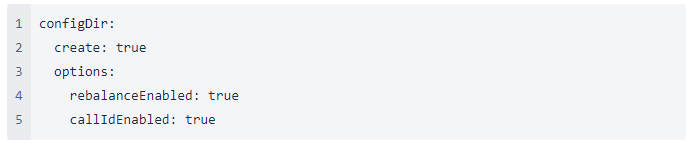
The rebalanceEnabled: false option disables the feature.
For this functionality to work correctly, you must upgrade dependent services to the following versions or higher:- SIP Proxy service: 100.1.100.0014
- SIP Front End: 100.1.100.0007
- Orchestration service: 100.1.100.0033 (VOICEMCS-3844)
Voice SIP Cluster service now allows customization of the Designer Application Server (DAS) part of the dial-plan-moh option value. To customize the value, specify a new designerDasAddress parameter in the Helm chart values.yaml file.
Support for this feature begins with Helm chart version voice-sip-100.0.1000013.tgz. (VOICEMCS-3843)

Voice Orchestration Service: February 22, 2022
Resolved Issues
Voice Orchestration Service now publishes to the session events correctly when it executes the <ixn:createcall> action and there is no answer at the destination. Previously, incorrect interaction.notcontrolled and interaction.deleted events were sometimes published for the "No Answer" scenario. (VOICEMCS-3818)
Voice SIP Cluster Service: February 16, 2022
Resolved Issues
When an agent initiates Single Step Conference (or 2 Step Conference) with an external caller and Routing Point (RP) and then leaves the call and logs out, a subsequent TRouteCall received on the RP executes successfully. Previously, the TRouteCall failed in this scenario. (VOICEMCS-3712)
Voice Orchestration Service: February 16, 2022
Resolved Issues
Voice Orchestration Service now correctly sets the media type for digital interactions from Twitter and Facebook. Previously, the media type was empty, which caused an exception in the strategy and the premature termination of the session. (VOICEMCS-3794)
Voice Tenant Service: February 07, 2022
-
Private Edition: 100.0.100.0041 available February 07, 2022
Security Fixes
This release includes important security upgrades made to third-party software. (GCLOUD-18712)
For private edition
Support for deploying the Tenant service in a single namespace with other private edition services has been implemented. No configuration changes are required to enable this alternative deployment scenario. For more information, see Deployment scenarios. (VOICEMCS-2912)
Voice Voicemail Service: February 01, 2022
-
Private Edition: 100.0.100.0009 available February 01, 2022
What's New
Support for General Data Protection Regulation (GDPR). If you need to update, view, or delete any data that might be affected by GDPR controls, contact Genesys Professional Services for assistance. (VOICEMCS-825)
For private edition
As of July 13, 2022, <service name> is Generally Available for deployment in Genesys Multicloud CX private edition on the Kubernetes platforms officially supported by Genesys.
An external library reference issue has been fixed. (VOICEMCS-3488)
Voice Orchestration Service: January 19, 2022
-
Private Edition: 100.0.100.0033 available March 28, 2022
Security Fixes
This release includes important security upgrades made to third-party software. (GCLOUD-18868)
Resolved Issues
Orchestration Service now correctly encodes the HTTP request URL when executing the action session:fetch with params containing special symbols such as the plus symbol (+). Previously, in some cases, the special symbols were not encoded properly to comply with HTTP specifications. (VOICEMCS-3581)
For private edition
As of July 13, 2022, <service name> is Generally Available for deployment in Genesys Multicloud CX private edition on the Kubernetes platforms officially supported by Genesys.
Support for deploying the Voice Front End Service in a single namespace with other private edition services has been implemented. To deploy the Voice Front End Service in a single namespace, override the namespace parameter in the Front End Service Helm chart values.yaml file:
(VOICEMCS-2912)
Voice Voicemail Service: December 10, 2021
-
Private Edition: 100.0.100.0008 available December 10, 2021
Security Fixes
This release includes important security upgrades made to third-party software. (GCLOUD-18874)
For private edition
Starting with this release, Voice Voicemail Service is available for select customers in Genesys Multicloud CX private edition, as part of the Early Adopter Program.
Voice Voicemail Service now supports the use of arbitrary, or random, user IDs (UIDs) in OpenShift.
- The Dockerfile has been modified to specify container and file ownership as user=500 (genesys) and group=0 (root).
- The securityContext settings exposed in the default values.yaml file specify the user and group IDs for the genesys user (500:500:500). You must override these Helm chart values if you want OpenShift to use arbitrary UIDs.
- Voice Voicemail Service is deployed using ServiceAccounts that use the restricted Security Context Constraint (SCC). In an earlier implementation, Genesys required you to deploy all private edition services using a ServiceAccount associated with the custom genesys-restricted SCC, to control permissions for the genesys user (500). Genesys now expects OpenShift to use arbitrary UIDs in your deployment, and the genesys-restricted SCC has been deprecated. If you previously deployed Voice Voicemail Service using the genesys-restricted SCC, Genesys recommends that you redeploy Voice Voicemail Service so that you use arbitrary UIDs. (VOICEMCS-2614)
Voice SIP Cluster Service: November 19, 2021
Resolved Issues
Voice SIP Cluster Service now correctly selects an originating trunk for inbound calls. Voice SIP Cluster Service selects the trunk only if the partition ID of that trunk is the same as the tenant callcenterid (CCID) received in the X-Genesys-Partition-Id header of the initial INVITE message that is arrived from a Voice SIP Proxy Service. (VOICEMCS-3224)
Known Issues
When a supervision conference fails to establish, the call monitoring subscription in SIP Server is not cleared. The result is that calls to the monitored DN are supervised even if the Supervisor cancels the monitoring session.
Voice SIP Proxy Service: November 12, 2021
-
Private Edition: 100.0.100.0010 available March 28, 2022
Resolved Issues
Voice SIP Proxy Service now includes an X-Genesys-Partition-Id header containing the tenant callcenterid (CCID) in the outgoing initial INVITE message. (VOICEMCS-3063)
Voice Orchestration Service: November 12, 2021
Resolved Issues
Voice Orchestration Service now correctly handles the HTTP 201 Created success status response during the <fetch> action. Previously, this response was triggered the error.session.fetch event. (VOICEMCS-3296)
Voice Orchestration Service: October 28, 2021
Resolved Issues
Voice Orchestration Service can now retrieve the password from the password option of the transaction list configuration object. Previously, the Designer Application did not retrieve the password from the transaction list object. (VOICEMCS-2951)
Voice Tenant Service: October 21, 2021
-
Private Edition: 100.0.100.0017 available October 21, 2021
For private edition
Tenant Service now supports optional forwarding of logs to standard output (stdout) using a Fluent Bit sidecar and an ephemeral volume (emptyDir). (VOICEMCS-2661)
Tenant Service now supports Persistent Volume (PV)/Persistent Volume Claim (PVC) with RWO storage for logging from individual Tenant pods. (VOICEMCS-2675)
Voice Orchestration Service: October 11, 2021
Resolved Issues
The Voice Orchestration Service no longer restarts unexpectedly when an SCXML session is terminated because of the "Too many pending events for session" condition. (VOICEMCS-2891)
The Voice Orchestration Service now starts the second session as soon as an EventRouteRequest message for the second Designer application arrives and the first session is detached from the first Designer application. (VOICEMCS-3107)
Voice SIP Cluster Service: September 27, 2021
-
Private Edition: 100.0.100.0014 available November 12, 2021
Resolved Issues
The call-cleanup idle timeout in the Voice SIP Cluster Service has been increased from 60 minutes to 4 hours. (VOICEMCS-2987)
For private edition
Voice SIP Cluster Service now supports optional forwarding of SIPNode logs to standard output (stdout) using a Fluent Bit sidecar and an ephemeral volume (emptyDir). You must override parameters in the voice-sip Helm chart values.yaml file to implement Fluent Bit log forwarding to stdout. (VOICEMCS-2662)
Voice Agent State Service: September 22, 2021
Resolved Issues
The Voice Agent State Service no longer performs After Call Work (ACW) actions when an agent logs out while on a call, and then the call is released. (VOICEMCS-2835)
Voice SIP Cluster Service: September 22, 2021
Resolved Issues
When a trunk, softswitch, or trunk group is deleted from the environment, the Voice SIP Cluster Service now correctly removes device's Prometheus metrics. Previously, the Voice SIP Cluster Service did not remove metrics of the deleted device, which led to invalid alerts on that device. (VOICEMCS-2751)
Voice Tenant Service: September 16, 2021
-
Private Edition: 100.0.100.0015 available September 16, 2021
For private edition
Voice Tenant Service now supports the use of arbitrary, or random, user IDs (UIDs) in OpenShift.
- The Dockerfile has been modified to specify container and file ownership as user=500 (genesys) and group=0 (root).
- The securityContext settings exposed in the default values.yaml file specify the user and group IDs for the genesys user (500:500:500). You must override these Helm chart values if you want OpenShift to use arbitrary UIDs. For more information, see Configure the Tenant Service.
- Voice Tenant Service is deployed using ServiceAccounts that use the restricted Security Context Constraint (SCC). In an earlier implementation, Genesys required you to deploy all private edition services using a ServiceAccount associated with the custom genesys-restricted SCC, to control permissions for the genesys user (500). Genesys now expects OpenShift to use arbitrary UIDs in your deployment, and the genesys-restricted SCC has been deprecated. If you previously deployed Voice Tenant Service using the genesys-restricted SCC, Genesys recommends that you redeploy Voice Tenant Service so that you use arbitrary UIDs. (VOICEMCS-2614)
More info: Configure the Tenant Service
As of October 29, 2021, Voice Tenant Service supports deployments on Google Kubernetes Engine (GKE) in Genesys Multicloud CX private edition, as part of the Early Adopter Program. (CPE-1978)
Voice Orchestration Service: September 15, 2021
-
Private Edition: 100.0.100.0010 available September 15, 2021
For private edition
Voice Orchestration Service now supports the use of arbitrary, or random, user IDs (UIDs) in OpenShift.
- The Dockerfile has been modified to specify container and file ownership as user=500 (genesys) and group=0 (root).
- The securityContext settings exposed in the default values.yaml file specify the user and group IDs for the genesys user (500:500:500). You must override these Helm chart values if you want OpenShift to use arbitrary UIDs. For more information, see Configure Voice Microservices.
- Voice Orchestration Service is deployed using ServiceAccounts that use the restricted Security Context Constraint (SCC). In an earlier implementation, Genesys required you to deploy all private edition services using a ServiceAccount associated with the custom genesys-restricted SCC, to control permissions for the genesys user (500). Genesys now expects OpenShift to use arbitrary UIDs in your deployment, and the genesys-restricted SCC has been deprecated. If you previously deployed Voice Orchestration Service using the genesys-restricted SCC, Genesys recommends that you redeploy Voice Orchestration Service so that you use arbitrary UIDs. (VOICEMCS-2614)
More info: Configure Voice Microservices
As of October 29, 2021, Voice Orchestration Service supports deployments on Google Kubernetes Engine (GKE) in Genesys Multicloud CX private edition, as part of the Early Adopter Program. (CPE-1983)
Voice Registrar Service: September 15, 2021
-
Private Edition: 100.0.100.0003 available September 15, 2021
For private edition
Voice Registrar Service now supports the use of arbitrary, or random, user IDs (UIDs) in OpenShift.
- The Dockerfile has been modified to specify container and file ownership as user=500 (genesys) and group=0 (root).
- The securityContext settings exposed in the default values.yaml file specify the user and group IDs for the genesys user (500:500:500). You must override these Helm chart values if you want OpenShift to use arbitrary UIDs. For more information, see Configure Voice Microservices.
- Voice Registrar Service is deployed using ServiceAccounts that use the restricted Security Context Constraint (SCC). In an earlier implementation, Genesys required you to deploy all private edition services using a ServiceAccount associated with the custom genesys-restricted SCC, to control permissions for the genesys user (500). Genesys now expects OpenShift to use arbitrary UIDs in your deployment, and the genesys-restricted SCC has been deprecated. If you previously deployed Voice Registrar Service using the genesys-restricted SCC, Genesys recommends that you redeploy Voice Registrar Service so that you use arbitrary UIDs. (VOICEMCS-2614)
More info: Configure Voice Microservices
As of October 29, 2021, Voice Registrar Service supports deployments on Google Kubernetes Engine (GKE) in Genesys Multicloud CX private edition, as part of the Early Adopter Program. (CPE-1983)
Voice Config Service: September 15, 2021
-
Private Edition: 100.0.100.0004 available September 15, 2021
For private edition
Voice Config Service now supports the use of arbitrary, or random, user IDs (UIDs) in OpenShift.
- The Dockerfile has been modified to specify container and file ownership as user=500 (genesys) and group=0 (root).
- The securityContext settings exposed in the default values.yaml file specify the user and group IDs for the genesys user (500:500:500). You must override these Helm chart values if you want OpenShift to use arbitrary UIDs. For more information, see Configure Voice Microservices.
- Voice Config Service is deployed using ServiceAccounts that use the restricted Security Context Constraint (SCC). In an earlier implementation, Genesys required you to deploy all private edition services using a ServiceAccount associated with the custom genesys-restricted SCC, to control permissions for the genesys user (500). Genesys now expects OpenShift to use arbitrary UIDs in your deployment, and the genesys-restricted SCC has been deprecated. If you previously deployed Voice Config Service using the genesys-restricted SCC, Genesys recommends that you redeploy Voice Config Service so that you use arbitrary UIDs. (VOICEMCS-2614)
More info: Configure Voice Microservices
As of October 29, 2021, Voice Config Service supports deployments on Google Kubernetes Engine (GKE) in Genesys Multicloud CX private edition, as part of the Early Adopter Program. (CPE-1983)
Voice Call State Service: September 15, 2021
-
Private Edition: 100.0.100.0004 available September 15, 2021
For private edition
Voice Call State Service now supports the use of arbitrary, or random, user IDs (UIDs) in OpenShift.
- The Dockerfile has been modified to specify container and file ownership as user=500 (genesys) and group=0 (root).
- The securityContext settings exposed in the default values.yaml file specify the user and group IDs for the genesys user (500:500:500). You must override these Helm chart values if you want OpenShift to use arbitrary UIDs. For more information, see Configure Voice Microservices.
- Voice Call State Service is deployed using ServiceAccounts that use the restricted Security Context Constraint (SCC). In an earlier implementation, Genesys required you to deploy all private edition services using a ServiceAccount associated with the custom genesys-restricted SCC, to control permissions for the genesys user (500). Genesys now expects OpenShift to use arbitrary UIDs in your deployment, and the genesys-restricted SCC has been deprecated. If you previously deployed Voice Call State Service using the genesys-restricted SCC, Genesys recommends that you redeploy Voice Call State Service so that you use arbitrary UIDs. (VOICEMCS-2614)
More info: Configure Voice Microservices
As of October 29, 2021, Voice Call State Service supports deployments on Google Kubernetes Engine (GKE) in Genesys Multicloud CX private edition, as part of the Early Adopter Program. (CPE-1983)
Voice SIP Cluster Service: September 15, 2021
-
Private Edition: 100.0.100.0012 available September 15, 2021
What's New
Voice SIP Cluster Service supports customized default music per Tenant basis that is played when a call is placed on hold. For each Tenant, the Voice SIP Cluster Service composes a specific URI that points to the Music on Hold (MOH) resource, and then includes this URI in a SIP INFO message to GVP when an active call is placed on hold. The MOH resource is a media file stored in the Designer Music on Hold media collection. Designer release 9.0.119.08 is required for this feature support. Refer to the Designer documentation for details. (VOICEMCS-1996)
Voice SIP Cluster Service supports SIP redundancy in multi-tenant environments. SIP redundancy enables the Voice SIP Cluster Service to place an outgoing call to an external destination/remote agent using a trunk or softswitch DN in another region within the Tenant if local resources are not available. (VOICEMCS-1894)
For private edition
Voice SIP Cluster Service now supports the use of arbitrary, or random, user IDs (UIDs) in OpenShift.
- The Dockerfile has been modified to specify container and file ownership as user=500 (genesys) and group=0 (root).
- The securityContext settings exposed in the default values.yaml file specify the user and group IDs for the genesys user (500:500:500). You must override these Helm chart values if you want OpenShift to use arbitrary UIDs. For more information, see Configure Voice Microservices.
- Voice SIP Cluster Service is deployed using ServiceAccounts that use the restricted Security Context Constraint (SCC). In an earlier implementation, Genesys required you to deploy all private edition services using a ServiceAccount associated with the custom genesys-restricted SCC, to control permissions for the genesys user (500). Genesys now expects OpenShift to use arbitrary UIDs in your deployment, and the genesys-restricted SCC has been deprecated. If you previously deployed Voice SIP Cluster Service using the genesys-restricted SCC, Genesys recommends that you redeploy Voice SIP Cluster Service so that you use arbitrary UIDs. (VOICEMCS-2614)
More info: Configure Voice Microservices
As of October 29, 2021, Voice SIP Cluster Service supports deployments on Google Kubernetes Engine (GKE) in Genesys Multicloud CX private edition, as part of the Early Adopter Program. (CPE-1983)
Voice SIP Proxy Service: September 15, 2021
-
Private Edition: 100.0.100.0005 available September 15, 2021
For private edition
Voice SIP Proxy Service now supports the use of arbitrary, or random, user IDs (UIDs) in OpenShift.
- The Dockerfile has been modified to specify container and file ownership as user=500 (genesys) and group=0 (root).
- The securityContext settings exposed in the default values.yaml file specify the user and group IDs for the genesys user (500:500:500). You must override these Helm chart values if you want OpenShift to use arbitrary UIDs. For more information, see Configure Voice Microservices.
- Voice SIP Proxy Service is deployed using ServiceAccounts that use the restricted Security Context Constraint (SCC). In an earlier implementation, Genesys required you to deploy all private edition services using a ServiceAccount associated with the custom genesys-restricted SCC, to control permissions for the genesys user (500). Genesys now expects OpenShift to use arbitrary UIDs in your deployment, and the genesys-restricted SCC has been deprecated. If you previously deployed Voice SIP Proxy Service using the genesys-restricted SCC, Genesys recommends that you redeploy Voice SIP Proxy Service so that you use arbitrary UIDs. (VOICEMCS-2614)
More info: Configure Voice Microservices
As of October 29, 2021, Voice SIP Proxy Service supports deployments on Google Kubernetes Engine (GKE) in Genesys Multicloud CX private edition, as part of the Early Adopter Program. (CPE-1983)
Voice Front End Service: September 15, 2021
-
Private Edition: 100.0.100.0004 available September 15, 2021
For private edition
Voice Front End Service now supports the use of arbitrary, or random, user IDs (UIDs) in OpenShift.
- The Dockerfile has been modified to specify container and file ownership as user=500 (genesys) and group=0 (root).
- The securityContext settings exposed in the default values.yaml file specify the user and group IDs for the genesys user (500:500:500). You must override these Helm chart values if you want OpenShift to use arbitrary UIDs. For more information, see Configure Voice Microservices.
- Voice Front End Service is deployed using ServiceAccounts that use the restricted Security Context Constraint (SCC). In an earlier implementation, Genesys required you to deploy all private edition services using a ServiceAccount associated with the custom genesys-restricted SCC, to control permissions for the genesys user (500). Genesys now expects OpenShift to use arbitrary UIDs in your deployment, and the genesys-restricted SCC has been deprecated. If you previously deployed Voice Front End Service using the genesys-restricted SCC, Genesys recommends that you redeploy Voice Front End Service so that you use arbitrary UIDs. (VOICEMCS-2614)
More info: Configure Voice Microservices
As of October 29, 2021, Voice Front End Service supports deployments on Google Kubernetes Engine (GKE) in Genesys Multicloud CX private edition, as part of the Early Adopter Program. (CPE-1983)
Voice Agent State Service: September 15, 2021
-
Private Edition: 100.0.100.0005 available September 15, 2021
For private edition
Voice Agent State Service now supports the use of arbitrary, or random, user IDs (UIDs) in OpenShift.
- The Dockerfile has been modified to specify container and file ownership as user=500 (genesys) and group=0 (root).
- The securityContext settings exposed in the default values.yaml file specify the user and group IDs for the genesys user (500:500:500). You must override these Helm chart values if you want OpenShift to use arbitrary UIDs. For more information, see Configure Voice Microservices.
- Voice Agent State Service is deployed using ServiceAccounts that use the restricted Security Context Constraint (SCC). In an earlier implementation, Genesys required you to deploy all private edition services using a ServiceAccount associated with the custom genesys-restricted SCC, to control permissions for the genesys user (500). Genesys now expects OpenShift to use arbitrary UIDs in your deployment, and the genesys-restricted SCC has been deprecated. If you previously deployed Voice Agent State Service using the genesys-restricted SCC, Genesys recommends that you redeploy Voice Agent State Service so that you use arbitrary UIDs. (VOICEMCS-2614)
More info: Configure Voice Microservices
As of October 29, 2021, Voice Agent State Service supports deployments on Google Kubernetes Engine (GKE) in Genesys Multicloud CX private edition, as part of the Early Adopter Program. (CPE-1983)
Voice Dial Plan Service: September 15, 2021
-
Private Edition: 100.0.100.0005 available September 15, 2021
For private edition
Voice Dial Plan Service now supports the use of arbitrary, or random, user IDs (UIDs) in OpenShift.
- The Dockerfile has been modified to specify container and file ownership as user=500 (genesys) and group=0 (root).
- The securityContext settings exposed in the default values.yaml file specify the user and group IDs for the genesys user (500:500:500). You must override these Helm chart values if you want OpenShift to use arbitrary UIDs. For more information, see Configure Voice Microservices.
- Voice Dial Plan Service is deployed using ServiceAccounts that use the restricted Security Context Constraint (SCC). In an earlier implementation, Genesys required you to deploy all private edition services using a ServiceAccount associated with the custom genesys-restricted SCC, to control permissions for the genesys user (500). Genesys now expects OpenShift to use arbitrary UIDs in your deployment, and the genesys-restricted SCC has been deprecated. If you previously deployed Voice Dial Plan Service using the genesys-restricted SCC, Genesys recommends that you redeploy Voice Dial Plan Service so that you use arbitrary UIDs. (VOICEMCS-2614)
More info: Configure Voice Microservices
As of October 29, 2021, Voice Dial Plan Service supports deployments on Google Kubernetes Engine (GKE) in Genesys Multicloud CX private edition, as part of the Early Adopter Program. (CPE-1983)
Voice RQ Service: September 15, 2021
-
Private Edition: 100.0.100.0002 available September 15, 2021
For private edition
Voice RQ Service now supports the use of arbitrary, or random, user IDs (UIDs) in OpenShift.
- The Dockerfile has been modified to specify container and file ownership as user=500 (genesys) and group=0 (root).
- The securityContext settings exposed in the default values.yaml file specify the user and group IDs for the genesys user (500:500:500). You must override these Helm chart values if you want OpenShift to use arbitrary UIDs. For more information, see Configure Voice Microservices.
- Voice RQ Service is deployed using ServiceAccounts that use the restricted Security Context Constraint (SCC). In an earlier implementation, Genesys required you to deploy all private edition services using a ServiceAccount associated with the custom genesys-restricted SCC, to control permissions for the genesys user (500). Genesys now expects OpenShift to use arbitrary UIDs in your deployment, and the genesys-restricted SCC has been deprecated. If you previously deployed Voice RQ Service using the genesys-restricted SCC, Genesys recommends that you redeploy Voice RQ Service so that you use arbitrary UIDs. (VOICEMCS-2614)
More info: Configure Voice Microservices
As of October 29, 2021, Voice RQ Service supports deployments on Google Kubernetes Engine (GKE) in Genesys Multicloud CX private edition, as part of the Early Adopter Program. (CPE-1983)
Voice Orchestration Service: August 19, 2021
Resolved Issues
The interactionid attribute is now included in interaction.terminate.done events. (VOICEMCS-2696)
When MCP returns the content of the variables to the SCXML session through an HTTP POST request and the content length of the request exceeds 100 KB, the Voice Orchestration Service no longer responds with an HTTP 413 error code because of the internal limit in the body-parser component. The content length limit is now increased to 1 MB. (VOICEMCS-2660)
Voice Tenant Service: August 05, 2021
-
Private Edition: 100.0.100.0004 available August 05, 2021
Security Fixes
This release improves storage of security keys. (VOICEMCS-2463)
Voice Agent State Service: June 30, 2021
-
Private Edition: 9.0.000.10 available June 30, 2021
For private edition
Starting with this release, Voice Agent State Service is available for select customers in Genesys Multicloud CX private edition, as part of the Early Adopter Program. Deployments on OpenShift Container Platform (OpenShift) are supported. (VOICEMCS-1740)
More info: Voice Microservices Private Edition Guide
Voice Dial Plan Service: June 30, 2021
-
Private Edition: 9.0.000.06 available June 30, 2021
For private edition
Starting with this release, Voice Dial Plan Service is available for select customers in Genesys Multicloud CX private edition, as part of the Early Adopter Program. Deployments on OpenShift Container Platform (OpenShift) are supported. (VOICEMCS-1740)
More info: Voice Microservices Private Edition Guide
Voice Call State Service: June 30, 2021
-
Private Edition: 9.0.000.05 available June 30, 2021
For private edition
Starting with this release, Voice Call State Service is available for select customers in Genesys Multicloud CX private edition, as part of the Early Adopter Program. Deployments on OpenShift Container Platform (OpenShift) are supported. (VOICEMCS-1740)
More info: Voice Microservices Private Edition Guide
Voice RQ Service: June 30, 2021
-
Private Edition: 9.0.000.08 available June 30, 2021
For private edition
Starting with this release, Voice RQ Service is available for select customers in Genesys Multicloud CX private edition, as part of the Early Adopter Program. Deployments on OpenShift Container Platform (OpenShift) are supported. (VOICEMCS-1740)
More info: Voice Microservices Private Edition Guide
Voice Front End Service: June 30, 2021
-
Private Edition: 9.0.000.05 available June 30, 2021
For private edition
Starting with this release, Voice Front End Service is available for select customers in Genesys Multicloud CX private edition, as part of the Early Adopter Program. Deployments on OpenShift Container Platform (OpenShift) are supported. (VOICEMCS-1740)
More info: Voice Microservices Private Edition Guide
Voice Registrar Service: June 30, 2021
-
Private Edition: 9.0.000.12 available June 30, 2021
For private edition
Starting with this release, Voice Registrar Service is available for select customers in Genesys Multicloud CX private edition, as part of the Early Adopter Program. Deployments on OpenShift Container Platform (OpenShift) are supported. (VOICEMCS-1740)
More info: Voice Microservices Private Edition Guide
Voice SIP Cluster Service: June 30, 2021
-
Private Edition: 9.0.000.32 available June 30, 2021
For private edition
Starting with this release, Voice SIP Cluster Service is available for select customers in Genesys Multicloud CX private edition, as part of the Early Adopter Program. Deployments on OpenShift Container Platform (OpenShift) are supported. (VOICEMCS-1740)
More info: Voice Microservices Private Edition Guide
Voice SIP Proxy Service: June 30, 2021
-
Private Edition: 9.0.000.09 available June 30, 2021
For private edition
Starting with this release, Voice SIP Proxy Service is available for select customers in Genesys Multicloud CX private edition, as part of the Early Adopter Program. Deployments on OpenShift Container Platform (OpenShift) are supported. (VOICEMCS-1740)
More info: Voice Microservices Private Edition Guide
Voice Config Service: June 30, 2021
-
Private Edition: 9.0.000.07 available June 30, 2021
For private edition
Starting with this release, Voice Config Service is available for select customers in Genesys Multicloud CX private edition, as part of the Early Adopter Program. Deployments on OpenShift Container Platform (OpenShift) are supported. (VOICEMCS-1740)
More info: Voice Microservices Private Edition Guide
Voice Tenant Service: June 30, 2021
-
Private Edition: 9.0.000.35 available June 30, 2021
For private edition
Starting with this release, Voice Tenant Service is available for select customers in Genesys Multicloud CX private edition, as part of the Early Adopter Program. Deployments on OpenShift Container Platform (OpenShift) are supported. (VOICEMCS-1740)
More info: Tenant Service Private Edition Guide
Voice Orchestration Service: June 30, 2021
-
Private Edition: 9.0.000.16 available June 30, 2021
For private edition
Starting with this release, Voice Orchestration Service is available for select customers in Genesys Multicloud CX private edition, as part of the Early Adopter Program. Deployments on OpenShift Container Platform (OpenShift) are supported. (VOICEMCS-1740)
More info: Voice Microservices Private Edition Guide